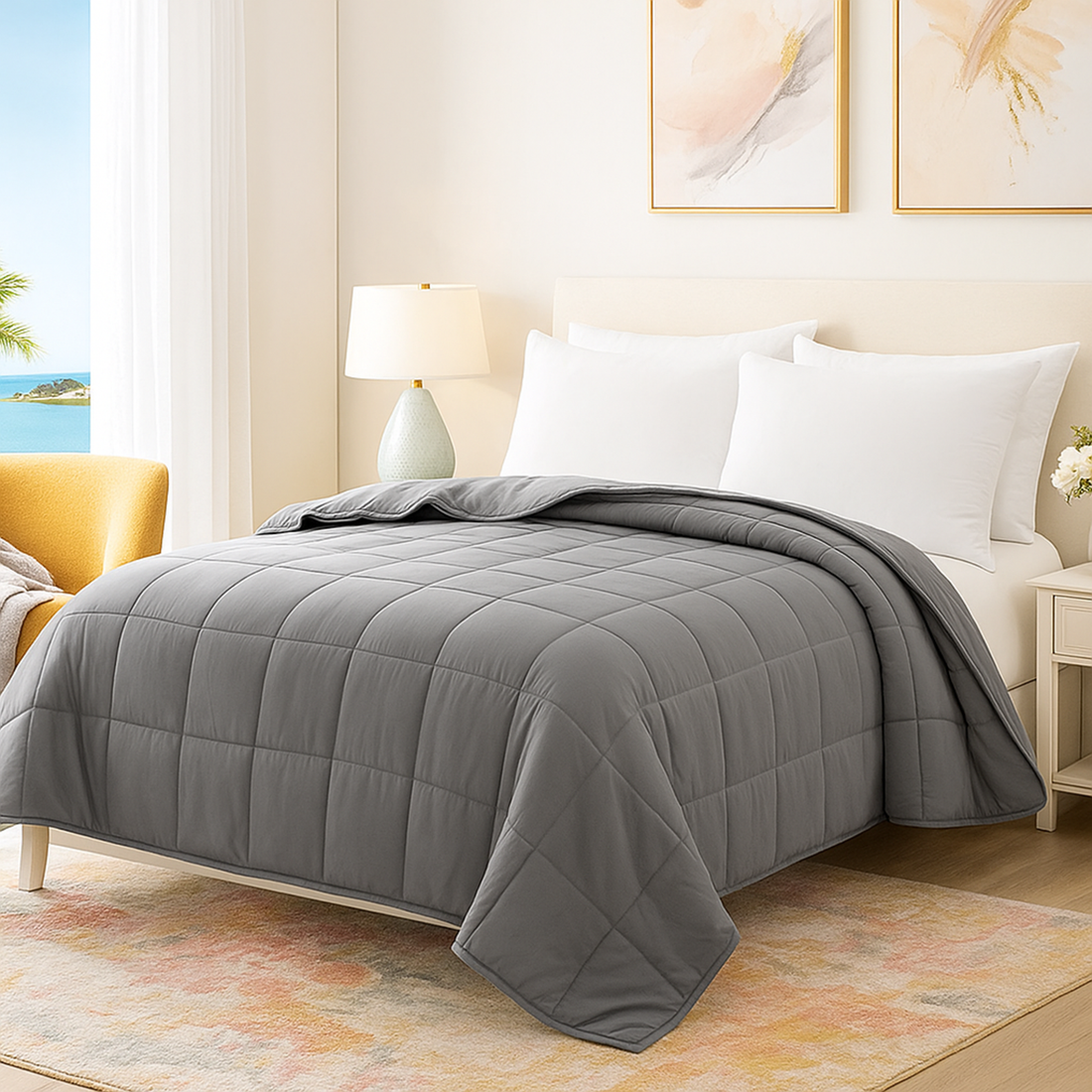
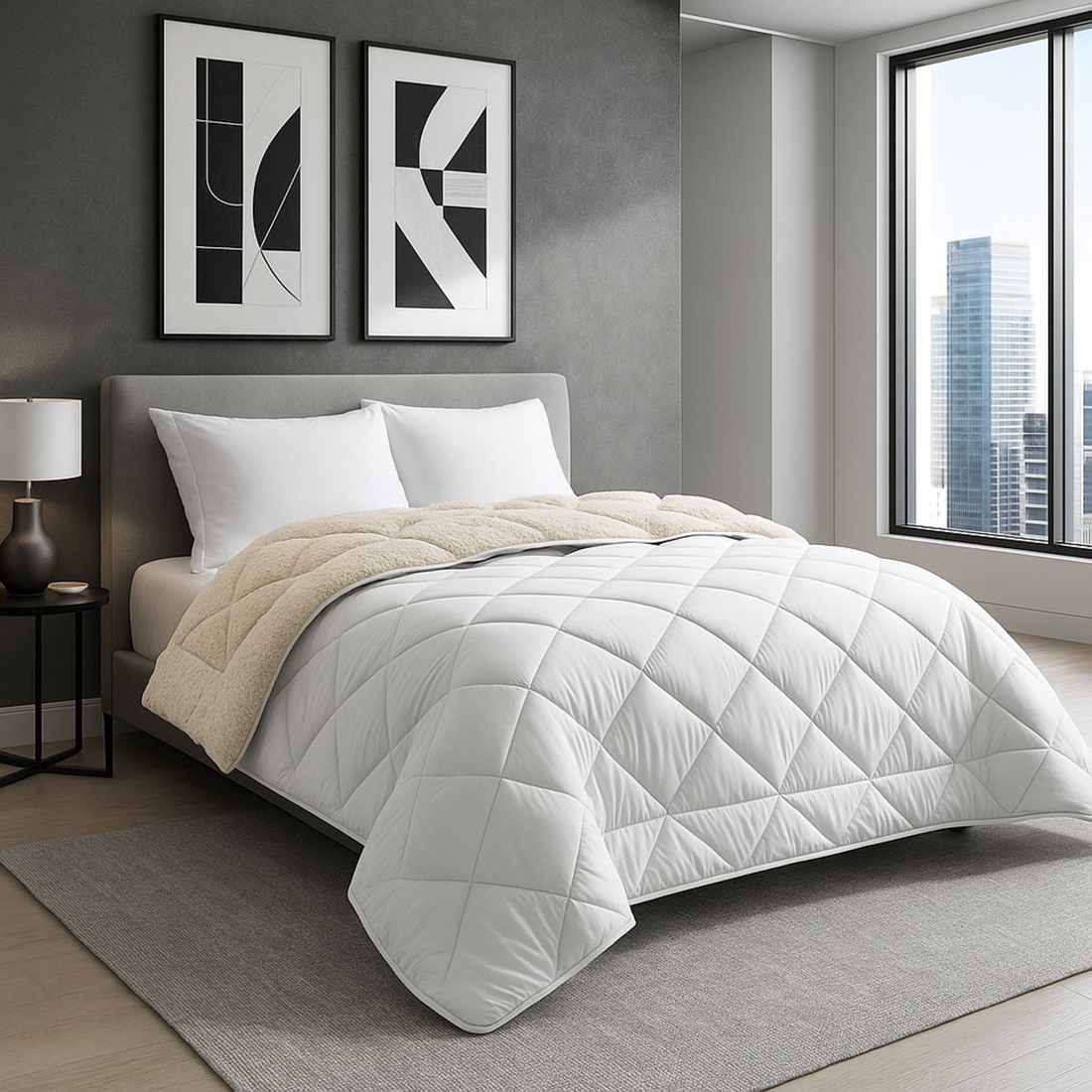
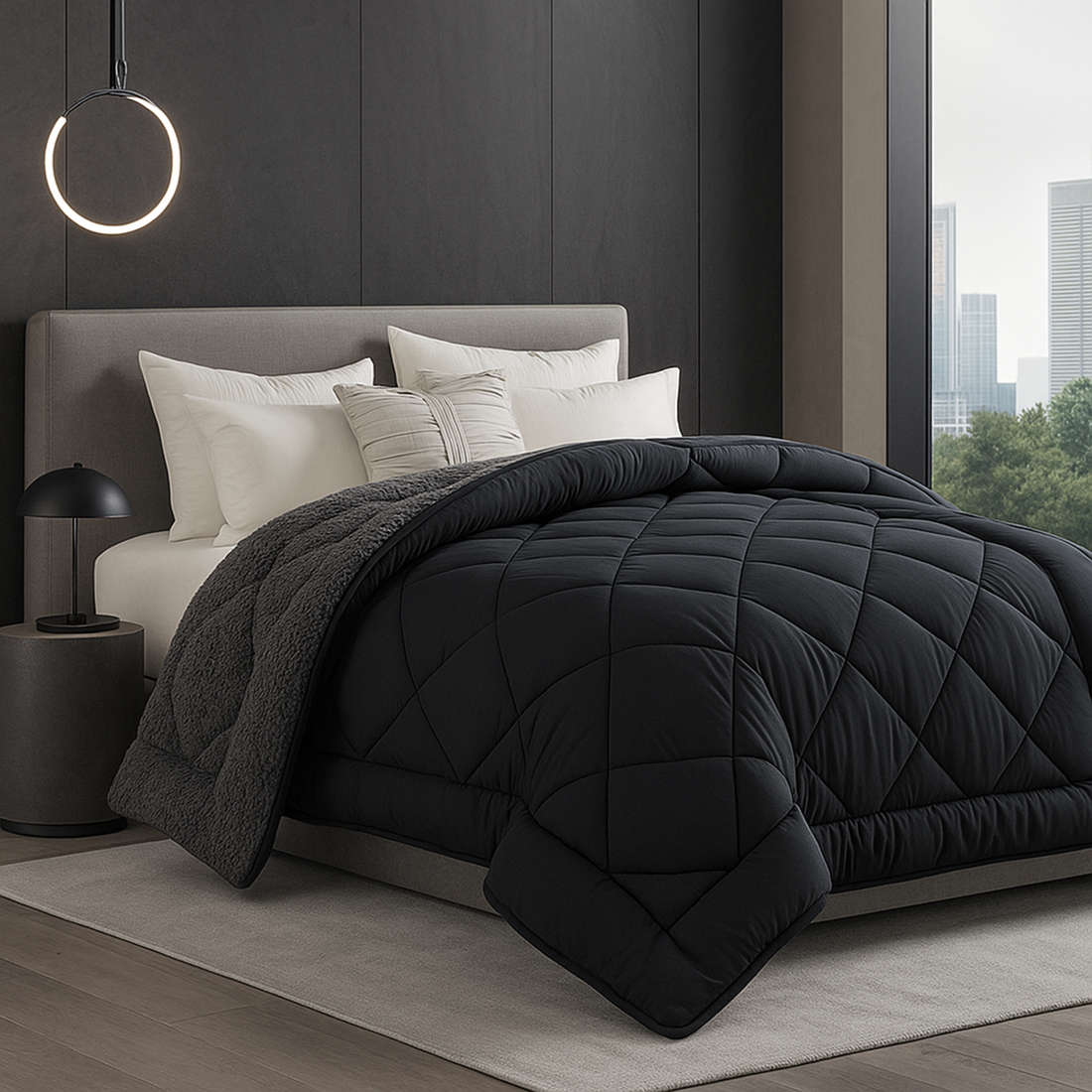
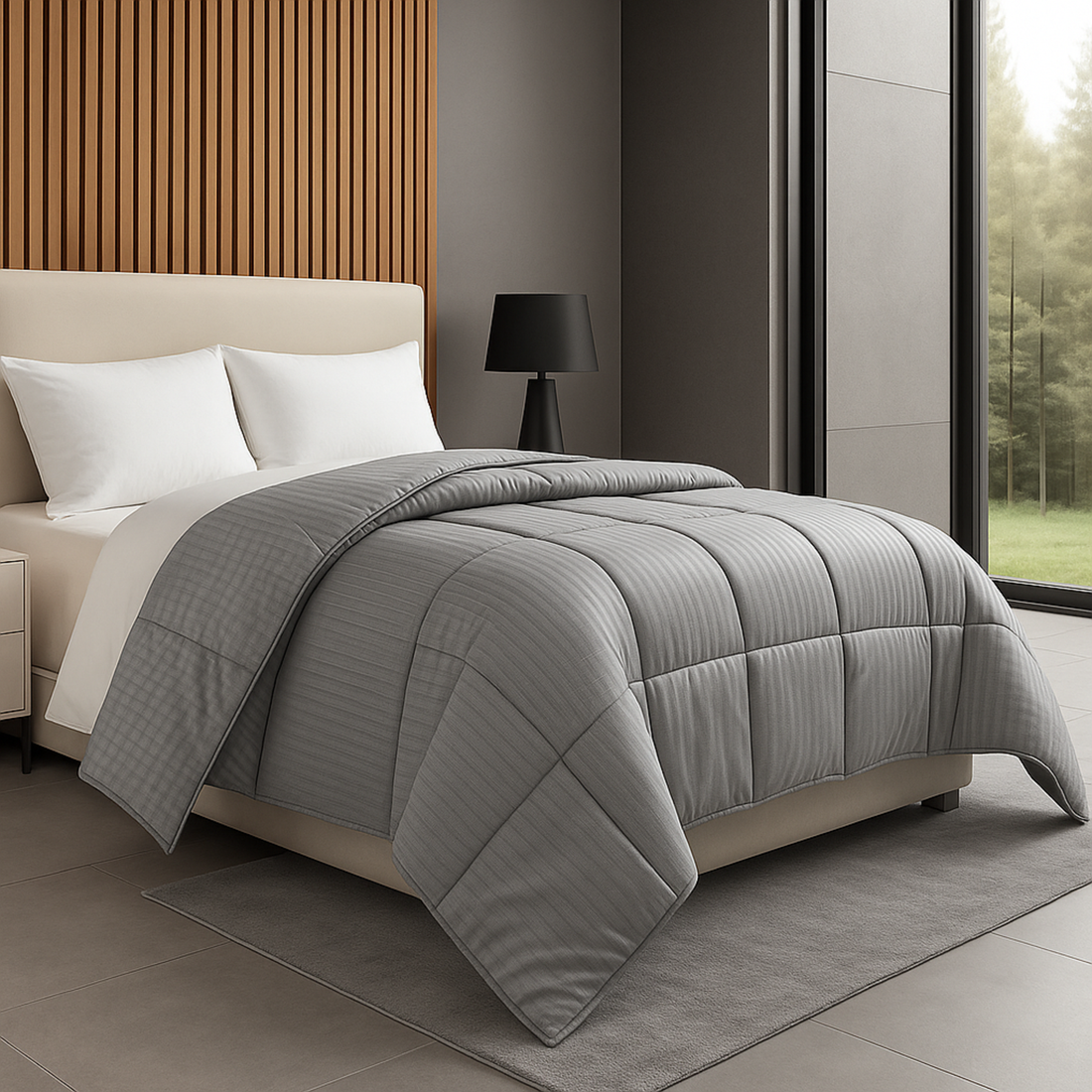
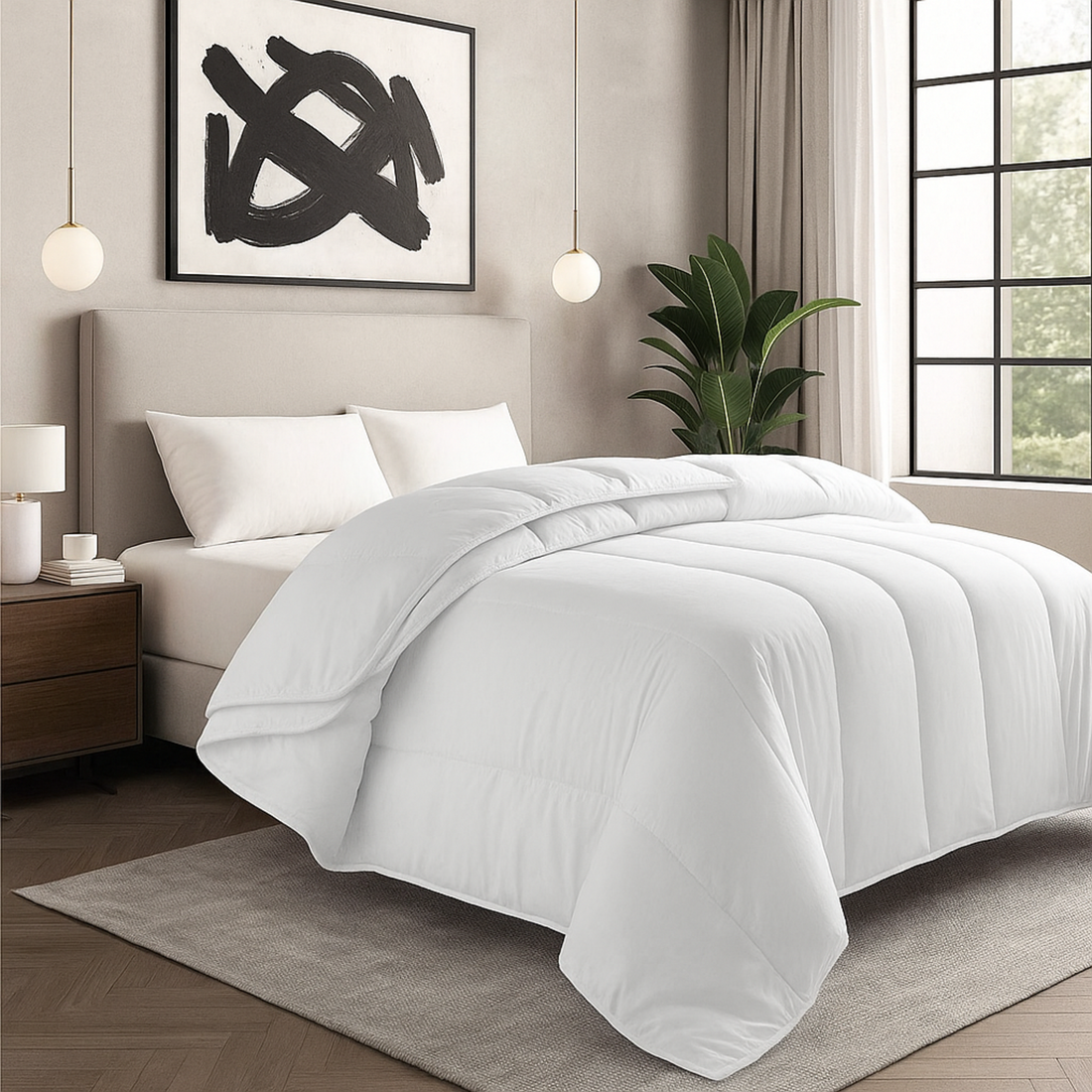
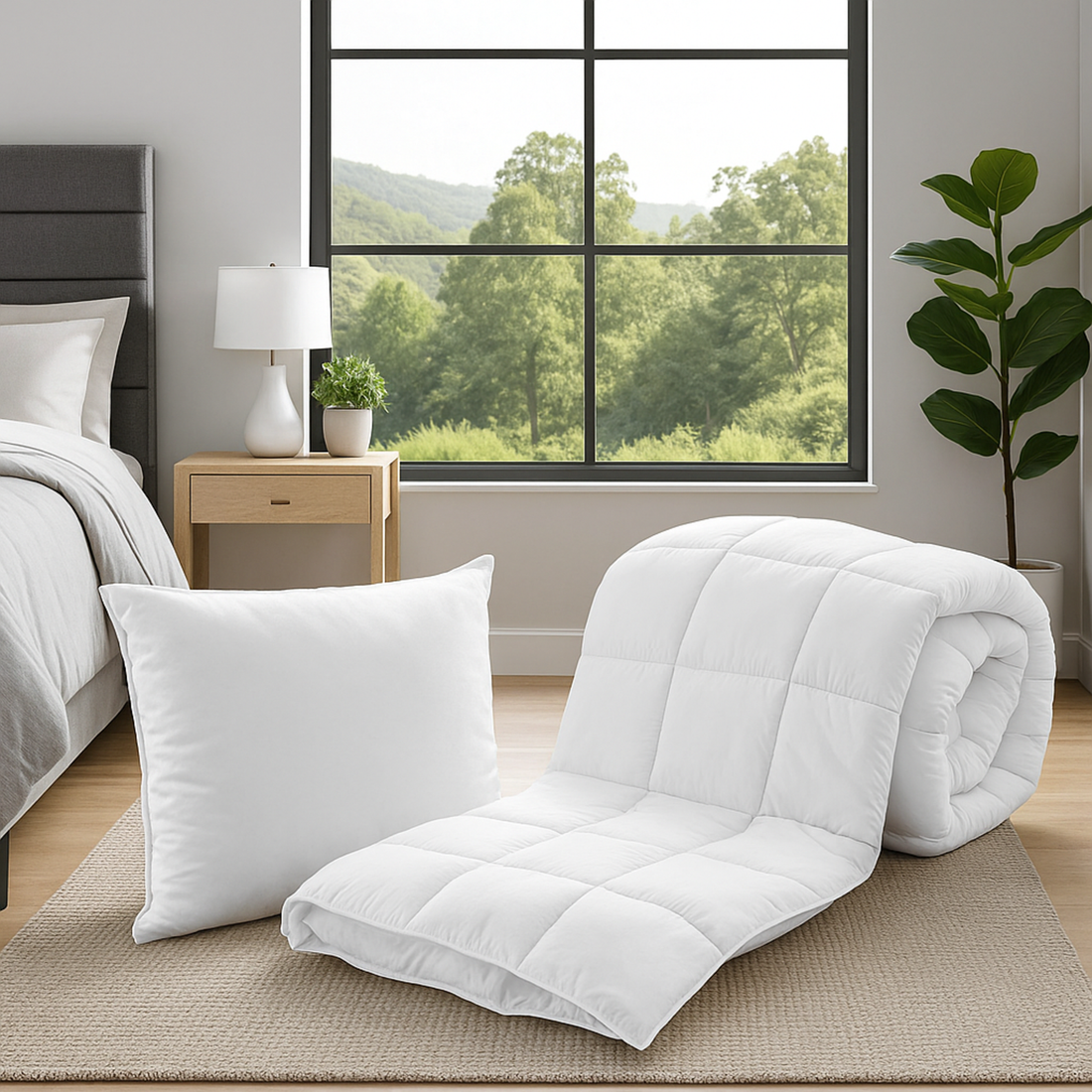
The lightweight duvet will be your best way to spend a comfortable and soft night in summer. Our lightweight duvets are easy to maintain and offered in different sizes (140 * 200 cm, 200 * 200 cm, 220 * 240 cm, 240 * 260 cm). They are also treated to be anti-mite, anti-bacterial, or anti-mold.
Choosing a duvet for summer
For the summer, it is ideal to opt for a lightweight duvet. The grammage should not exceed 250g/m2. You can choose a natural duvet made of feathers and down, or a synthetic duvet in case of allergies.
All summer duvetsfrom Sampur are thermoregulating. To ensure optimal comfort, choose a duvet with dimensions wider than your mattress.
Why buy a lightweight duvet?
The choice of a duvet is made according to the temperature of the room but also in relation to our own sensitivity to heat or cold. Ideally, the choice of a lightweight duvetis made in a room where the temperature is 22°C or higher. The ideal is to adapt your type of duvet to the seasons, and thus alternate between a warm duvet for winter and a lightweight summer duvet. For mid-season, you can opt for a medium duvet.
At Sampur, we offer different warmth levels to cover all needs:
How to choose your lightweight duvet?
There are two main types of duvets, natural duvets (feather duvetsand down duvets) and microfiber duvets(synthetic). Thermally, there is no real difference between the two fillings.
Thus, the choice will be made according to your tastes.
Natural duvets are more durable. Their prices vary according to the percentage of down. The higher the percentage, the lighter and fluffier the duvet will be. Down also provides warmth and softness.
Synthetic duvets are more affordable. If you suffer from respiratory allergies, synthetic duvets are recommended because synthetic fibers are much less allergenic than down and feathers.
The duvet should hang 20 to 50 cm over each side of the bed so you don't feel drafts when you lie down. For example, for a 140x190cm mattress, we recommend a 200x200cm duvetor a 220x240 cm duvet. For a 200x200 mattressor a 180x200 mattress, we advise a 240x260 cm duvet.
What grammage to choose for our lightweight duvets?
The choice of a duvet is made according to the temperature of the room but also in relation to our own sensitivity to heat or cold.
Ideally, the choice of a lightweight duvetis made in a room where the temperature is 22°C or higher. The ideal is to adapt your type of duvet to the seasons, and thus alternate between a warm duvet for winter and a lightweight summer duvet. For mid-season, you can opt for a medium duvet.
How to maintain your lightweight duvet?
To wash a duvetin a machine, use the appropriate program and, if possible, liquid detergent, as it is easier to rinse out. For the washing temperature, we recommend that you do not exceed 30°C for natural duvets (feathers and down). You can wash synthetic duvets in the machine at a temperature between 40°C and 60°C. People with dust mite allergies should wash their sheets and duvets more frequently. Drying is also important for duvets. The higher the density of the duvet, the thicker the duvet and therefore the longer it takes to dry. Be careful not to store or use your duvet until it is completely dry, otherwise your duvet risks developing mold.
Lightweight duvet, medium-weight duvet, or warm duvet: what is the difference?
The main difference between a lightweight duvet, a medium-weight duvet, and a warm duvet lies in their level of warmth.
The lightweight duvet is particularly suitable for hot periods and for people who sweat easily while sleeping. A medium-weight duvetis an intermediate solution, interesting for mid-season or in a room where the temperature remains moderate. The warm duvet is more intended for winter, for cool rooms, and for people who get cold easily.
Owning several duvets allows you to adapt your bedding to the seasons: a thin duvet for summer, a medium-weight duvet for mid-season, and a warm or very warm duvet for the coldest nights.
A breathable duvet to sleep better when it's hot
During hot nights, the breathability of the bedding becomes particularly important. A breathable duvethelps to maintain a more pleasant sleeping environment and limits the feeling of being confined associated with duvets that are too thick.
For the summer, choosing a lightweight and breathable duvetallows you to maintain the softness of a duvet while seeking more coolness. Some models combine lightweight fibers with fabrics specially selected to improve comfort during hot periods.
To complete your summer bedding, also remember to choose suitable linens, especially sheets, duvet covers, and pillowcases that are pleasant when temperatures rise.
Complete your lightweight bedding for the summer
Comfort during hot periods does not depend solely on the duvet. To create a pleasant sleeping arrangement, you can pair your lightweight summer duvetwith comfortable pillows, a suitable duvet cover, and bed linens selected for the season.
SAMPUR offers various bedding solutions to create a sleep environment adapted to your needs: duvets, pillows, mattresses, mattress toppers, bed bases, beds, and bed linens