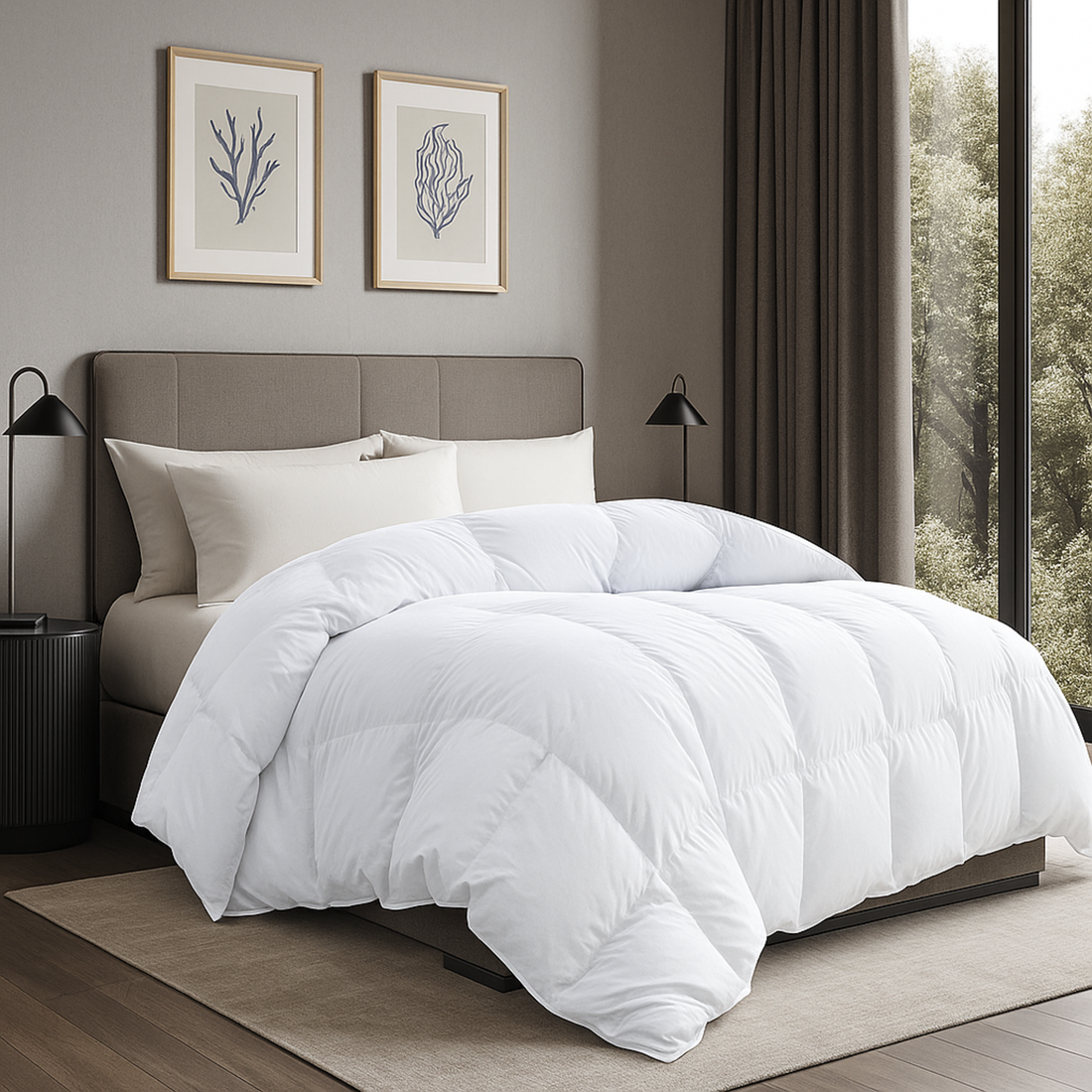
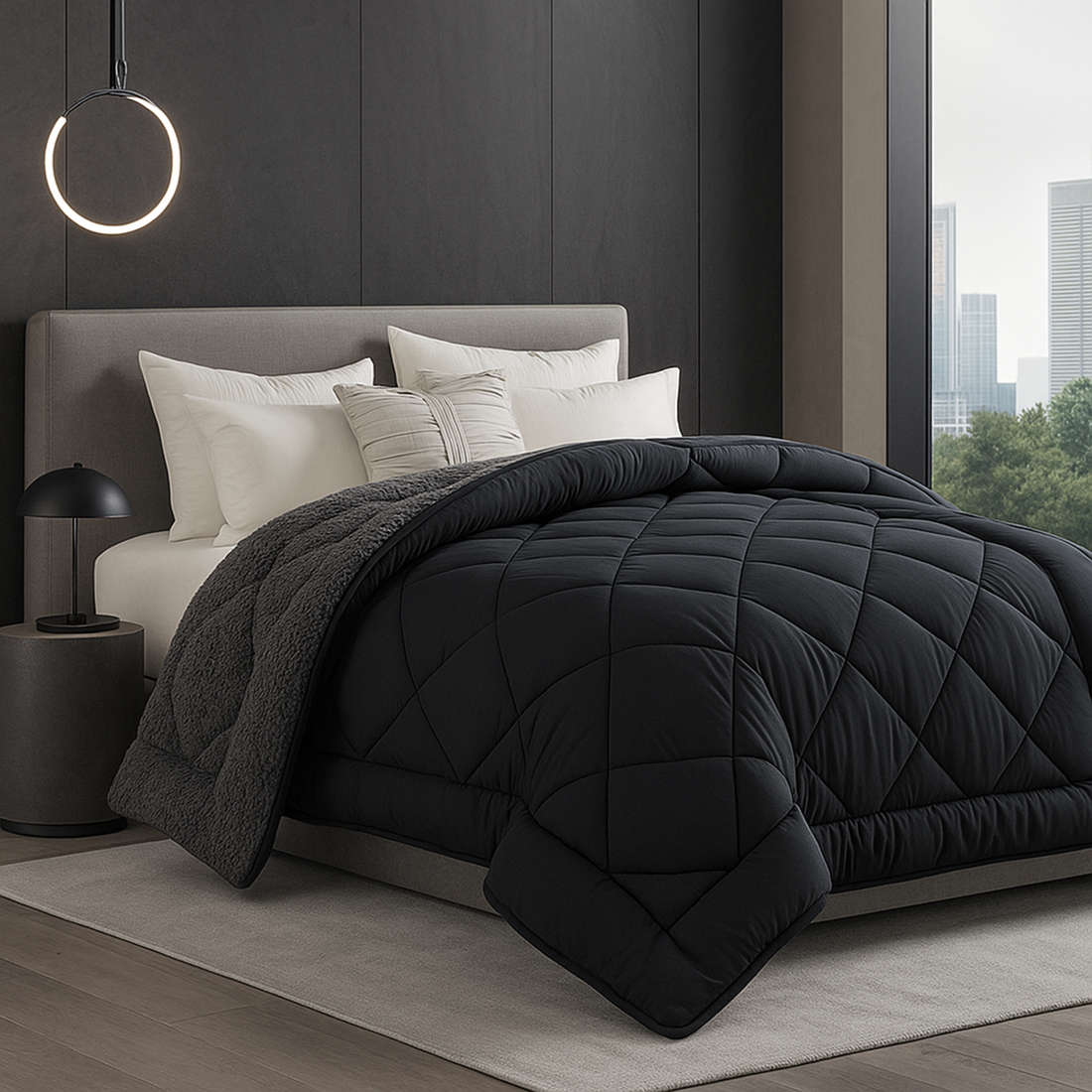
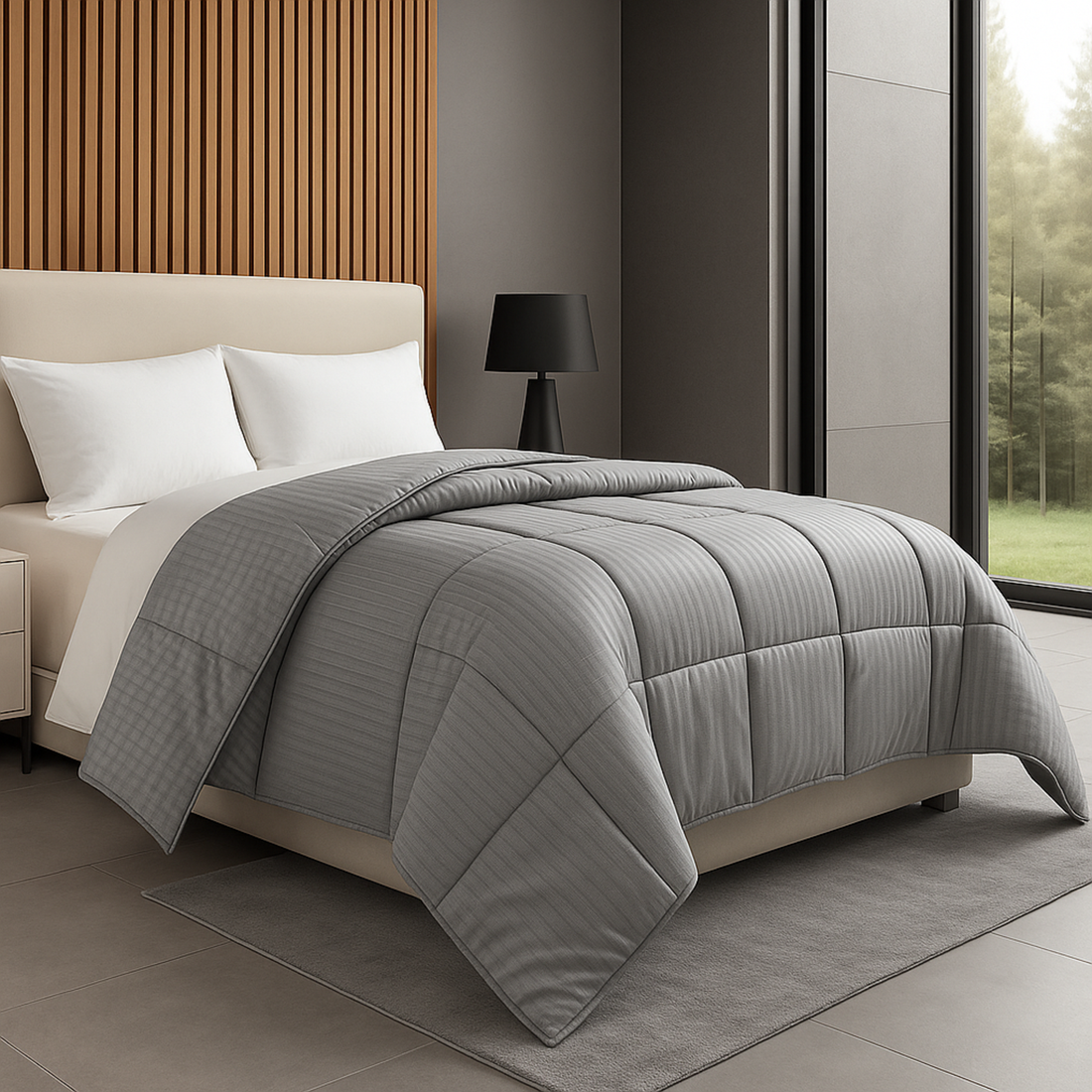
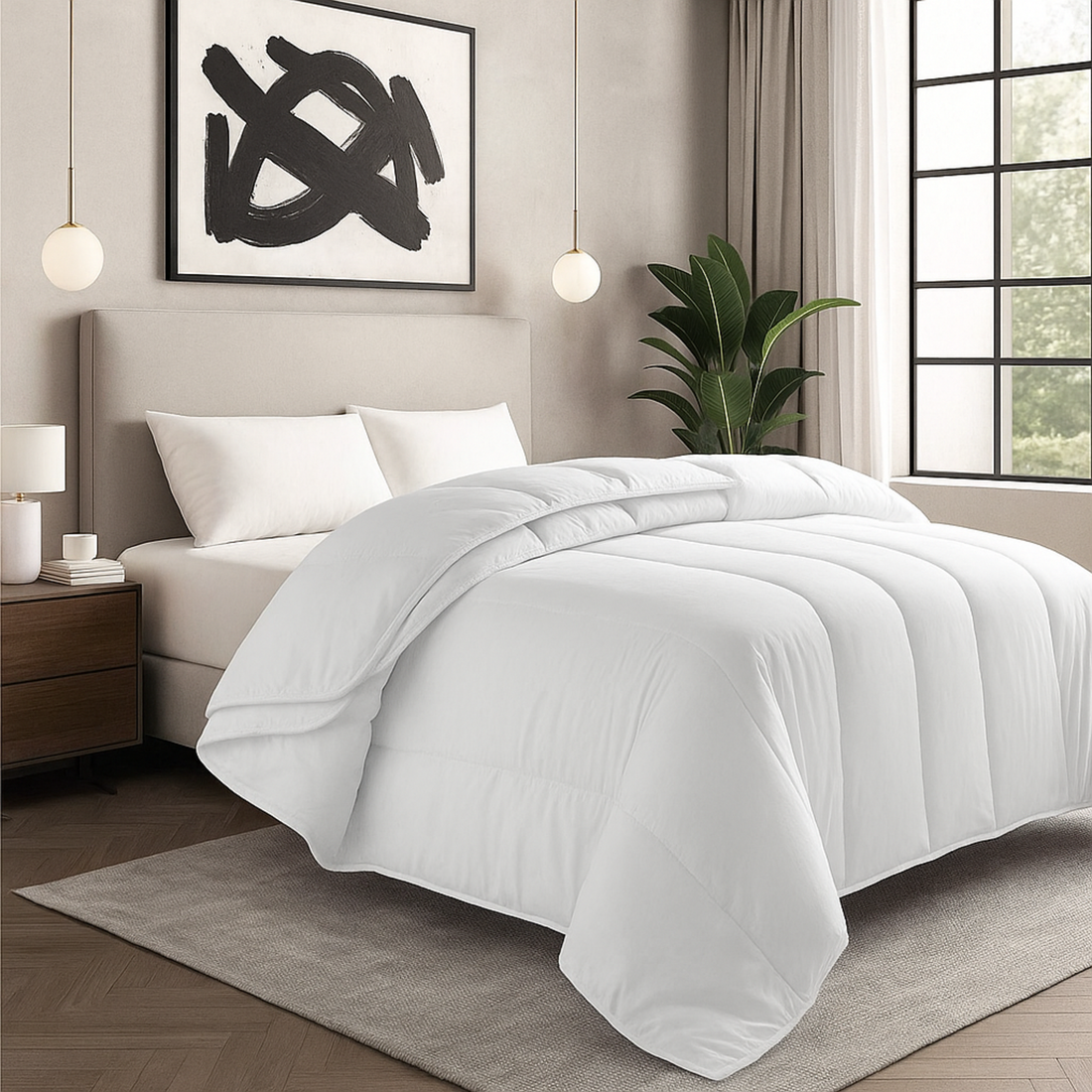
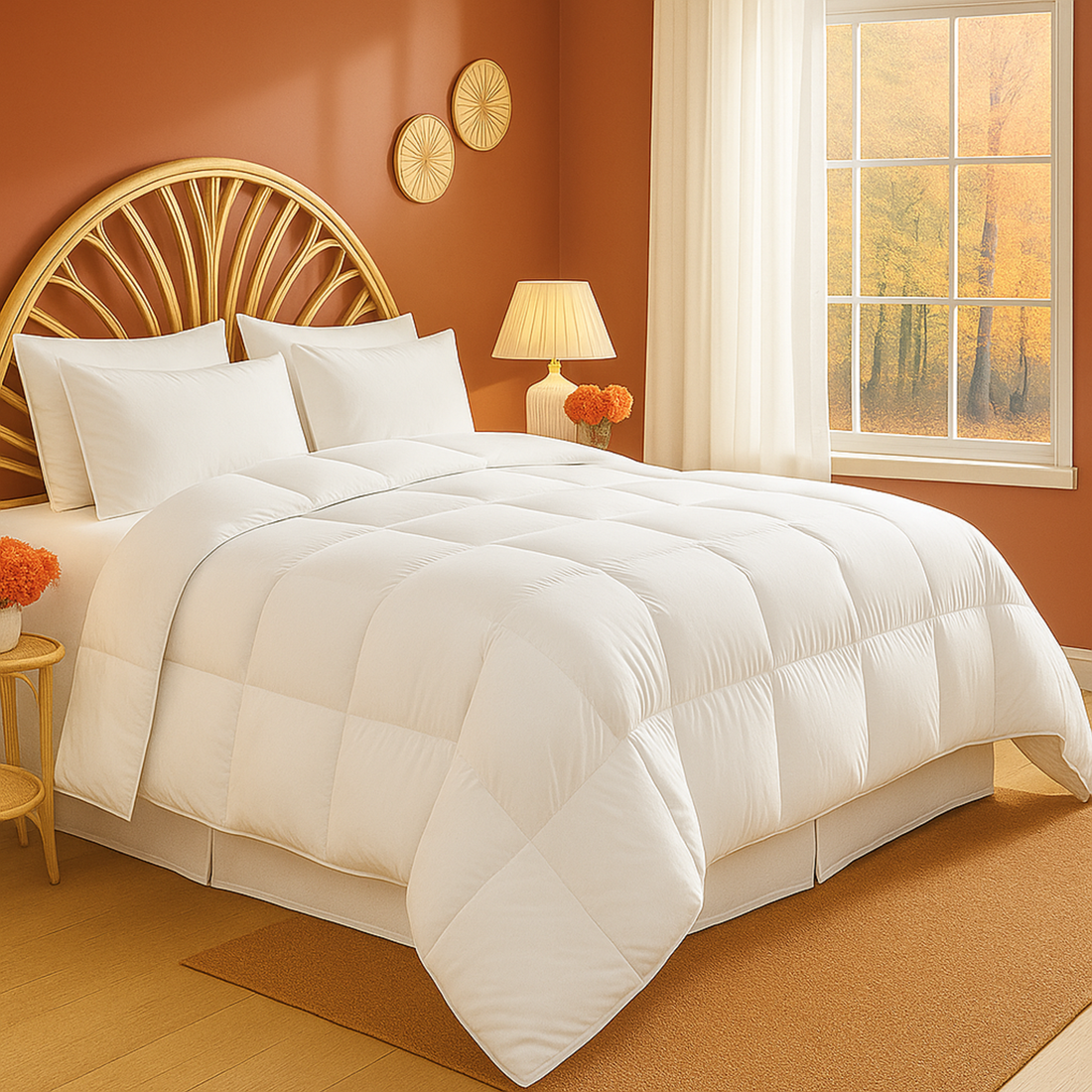
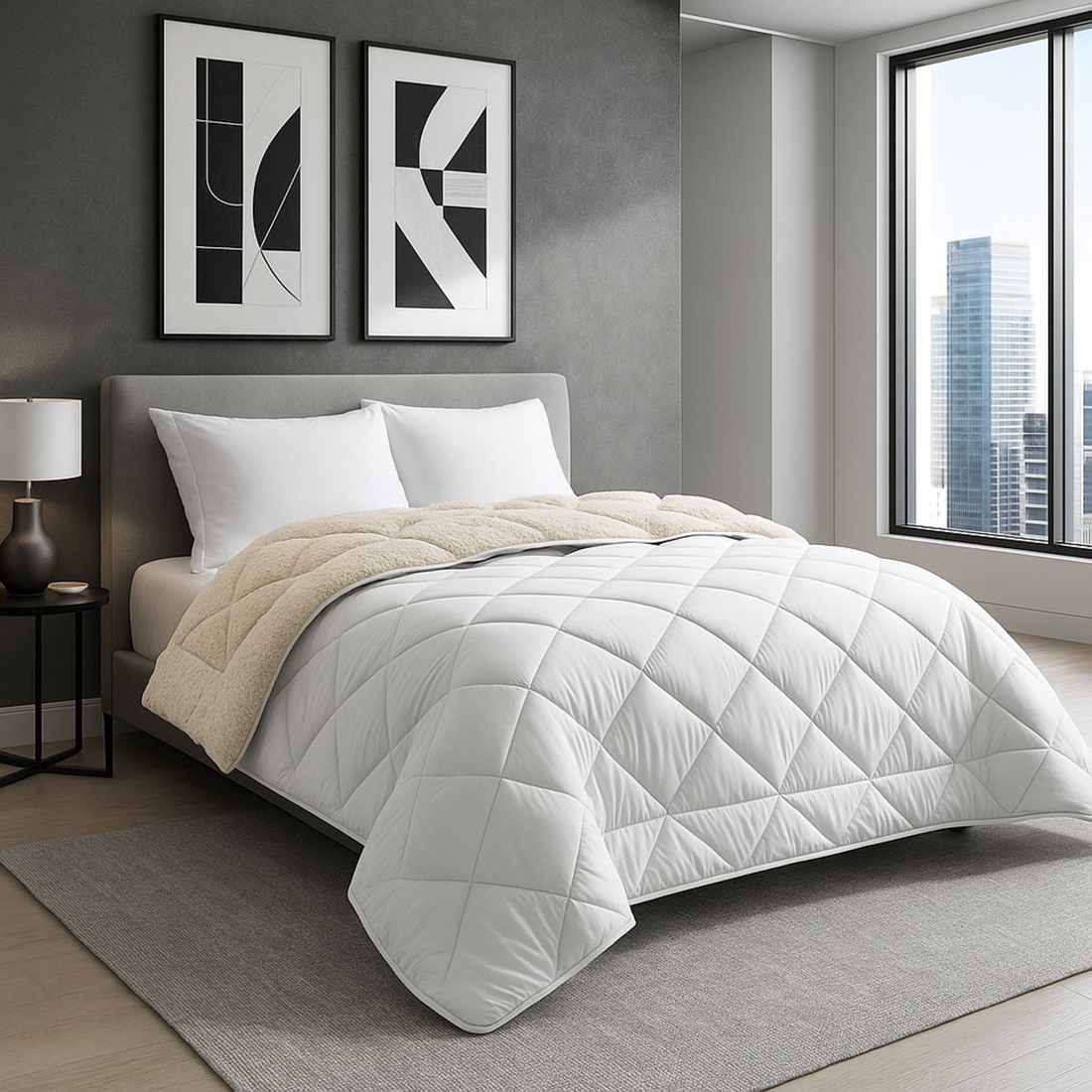
Choosing a quality duvet is an essential step toward improving your sleep, but it is only one part of the equation. To achieve optimal nighttime comfort, it is essential to create a complete and consistent bedding ecosystem.
Building a true sleep ecosystem around your Sampur duvet
At Sampur, every product is designed to work in synergy: duvet, pillows and bolster, bed linen, mattress, bed frame and bed base, mattress topper... This holistic approach helps optimize all the key elements of sleep:
- thermoregulation,
- body support,
- breathability,
- bedding durability.
The result: deeper, more restorative, and lastingly comfortable sleep.
Sampur pillows and bolsters: essential support to maximize the effectiveness of your duvet
A high-performance duvet cannot reveal its full potential without a suitable pillow (soft pillow, balanced pillow, firm pillow...). Head and cervical support plays a direct role in sleep quality.
Sampur pillows are designed to meet every need:
Combined with your duvet, they help create perfect spinal alignment, promoting better muscle recovery and tension-free sleep.
Our pillows are available in the following dimensions:
The combination of duvet + ergonomic pillowis essential for overall comfort and optimal sleep quality.
Sampur bed linen: a key lever for your duvet's performance
Bed linen is often underestimated, yet it directly influences the breathability, hygiene, and thermal comfort of your bedding.
A high-end duvet requires suitable textiles to maintain its performance.
The benefits of Sampur bed linen:
- Soft and breathable materialsfor pleasant contact with the skin
- Excellent moisture absorptionto limit perspiration
- Resistance and durabilityeven after many washes
- Maintenance of the duvet's loft and thermal performance
Sampur duvet covers, sheets, pillowcasesand bedding setsare designed to respect the structure of the filling without compressing it, in order to guarantee optimal thermal insulation.
Good bed linen directly improves sleep quality.
Bed and bed base: the essential foundation for lasting comfort
Even the best duvet cannot compensate for poorly adapted bedding. The bed and bed baseplay a fundamental role in the quality of your sleep setup.
A quality bed baseallows for:
- Better mattress ventilation
- Moisture wicking
- Optimal air circulation under the duvet
- Extended lifespan for your mattress
This contributes directly to a healthier sleep environment, improving your duvet's performance and your overall comfort.
A good bed base = better sleep + more durable bedding.
Learn more: How to properly equip your bedroom?
Sampur mattress topper: adjust your comfort to perfection
The mattress topperis a strategic element for refining your comfort without changing your mattress. It acts directly on the feel, support, and thermal sensation under your duvet.
The different types of Sampur mattress toppers:
The mattress topper allows you to:
- Correct a mattress that is too firm
- Firm up bedding that is too soft
- Immediately improve comfort
It is a powerful lever for optimizing your sleep experience.
Create a high-performance bedding system for restorative sleep
Quality sleeprelies on a holistic approach to bedding. The duvet alone is not enough: it is the harmony between all elements that makes the difference.
With Sampur, you are not just choosing a duvet, but a complete sleep ecosystem, designed to meet modern requirements: comfort, hygiene, performance, and durability.
Your bedroom then becomes a true cocoon of well-being, where every element contributes to restorative nights and more serene awakenings.